
Music
Benefits of Music Education for Children
- Cognitive Development
- Enhances Language Skills
- Boosts Academic Performance
- Encourages Emotional Expression
- Promotes Cultural Awareness
- Improves Social Skills
- Fosters Creativity and Imagination
- Builds Confidence and Self-Esteem
- Encourages Lifelong Appreciation
Contact Info
“Connect with Us – Your Path to Admission Starts Here!”
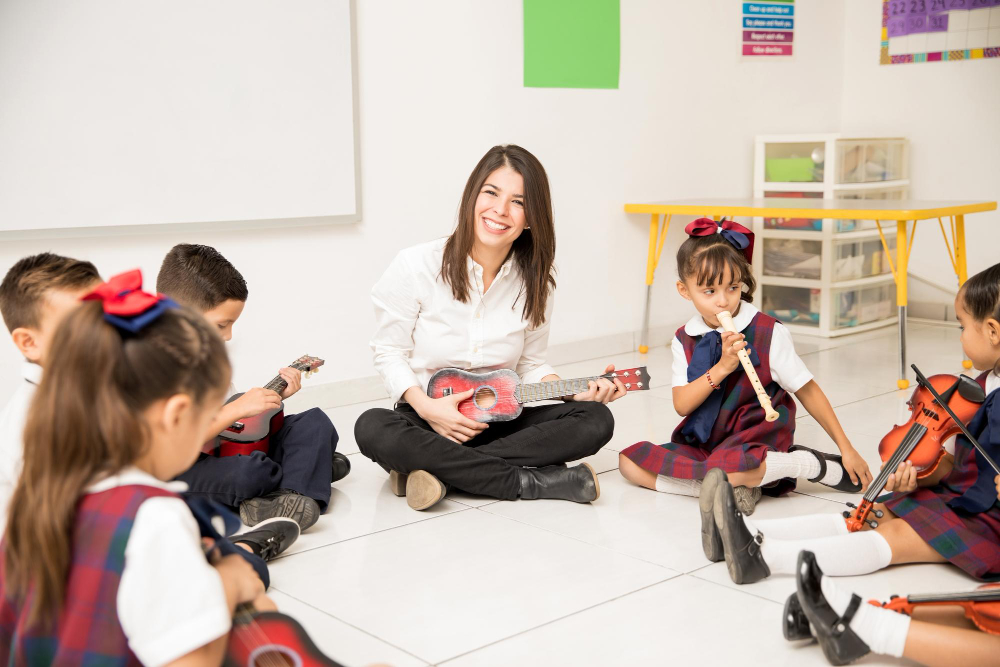
Music has been an integral part of human culture for centuries, and its impact on childhood development is profound. Learning music at an early age offers a range of cognitive, emotional, social, and academic benefits that can significantly enhance a child’s overall growth. From improving memory and coordination to fostering discipline and creativity, music education equips students with skills that extend beyond the classroom and last a lifetime. This essay explores the multifaceted ways in which learning music in childhood can positively influence a student’s life.
1. Cognitive Development
Learning music enhances cognitive abilities, as it involves complex brain processes that stimulate various regions simultaneously. When children learn to play an instrument, they engage in activities that require them to read sheet music, process timing, and coordinate physical movements. This combination improves neural connections, boosting overall brain function.
- Improved Memory: Studies show that children involved in music education have better memory retention than their peers. Music training enhances both verbal and visual memory by encouraging the brain to store and recall information more effectively.
- Enhanced Problem-Solving Skills: Music often involves recognizing patterns, improvising, and solving challenges, which trains children to think critically and approach problems creatively.
2. Academic Performance
Music education positively impacts academic achievement, as it strengthens skills that are transferable to other areas of learning. For example:
- Math and Logical Thinking: Understanding rhythm and beats helps children grasp mathematical concepts such as fractions, patterns, and ratios.
- Language and Literacy: Music training improves phonemic awareness and auditory processing, which are essential for language development. Children who learn music often excel in reading and writing, as they develop a better understanding of sounds and their meanings.
- Concentration and Discipline: Regular practice sessions instill discipline and improve focus, which can be applied to academic studies.