
Secondary
Key Features:
- Standardized, internationally recognized tests for benchmarking performance.
- Diagnostic feedback reports for detailed insights into student progress.
- Exams in core subjects: English, Mathematics, and Science.
- Focus on student responsibility and leadership, preparing them for future challenges.
Need for secondary education:
Secondary education is not just a stepping stone for higher learning; it is a critical enabler of individual empowerment and national development. By strengthening secondary education, India can unlock the full potential of its demographic dividend, fostering a society that is educated, equitable, and progressive.
Contact Info
“Connect with Us – Your Path to Admission Starts Here!”
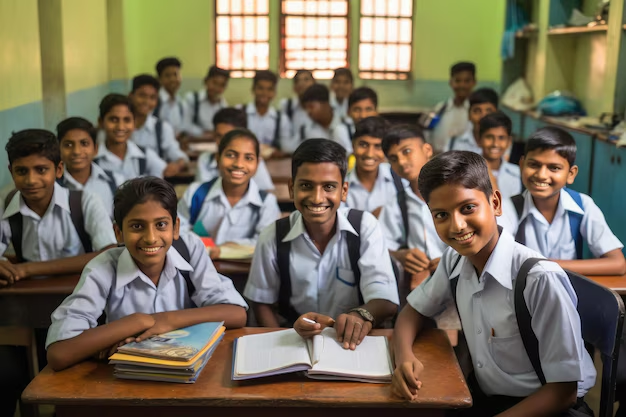
Padmadeepa provides best quality secondary education
Secondary education plays a pivotal role in the educational journey of individuals in India, bridging the gap between primary education and higher studies or vocational training. It serves as the foundation for personal, social, and national development, addressing critical developmental needs in a rapidly evolving society. Here’s why secondary education is vital in the Indian context:
1. Academic and Skill Development
- Foundation for Higher Education: Secondary education equips students with the knowledge and skills needed for higher education in diverse fields such as science, commerce, arts, and technology.
- Skill Acquisition: With the integration of vocational subjects and skill-based learning in many schools, secondary education prepares students for employability and entrepreneurship.
2. Economic Growth
- Human Capital Development: A well-educated population is essential for economic progress. Secondary education enhances cognitive skills and technical knowledge, contributing to a more productive workforce.
- Reduction in Poverty: By increasing employability and earning potential, secondary education helps reduce poverty and promote economic mobility.
3. Social Empowerment
- Gender Equality: Access to secondary education, particularly for girls, is crucial for promoting gender equality. Educated women are more likely to participate in the workforce and make informed decisions about health, family, and community welfare.
- Reduction in Social Inequalities: By offering quality education to marginalized communities, secondary education helps bridge socio-economic gaps and fosters inclusivity.
4. Nation Building
- Civic Responsibility: Secondary education often includes subjects like history, civics, and environmental studies, fostering a sense of responsibility and citizenship.
- Youth Engagement: Educating young people reduces the likelihood of youth unemployment, delinquency, and other social issues, channeling their energy into constructive activities.
5. Personal Growth and Critical Thinking
- Holistic Development: Secondary education emphasizes critical thinking, creativity, and problem-solving, enabling students to approach life’s challenges with confidence.
- Emotional and Social Maturity: Adolescents learn to navigate their formative years, developing interpersonal skills and a sense of identity.
6. Global Competitiveness
- Technological and Scientific Progress: A strong secondary education system fosters innovation and helps India compete on the global stage in science, technology, and other fields.
- Cultural Exchange and Awareness: Exposure to diverse ideas and global perspectives prepares students for an interconnected world.